How Much Money Do You Actually Need to Retire?
The 4% Rule
The 4% rule is a widely known guideline in retirement planning that suggests how much a retiree can withdraw from their savings each year without running out of money over a 30-year retirement period. The rule is based on the assumption that a balanced portfolio (typically a mix of stocks and bonds) will generate returns that are sufficient to sustain withdrawals for three decades.
Here's how it works:
- Determine Your Retirement Savings:
- First, calculate the total amount you’ve saved for retirement. This is typically your retirement nest egg, which could be in 401(k)s, IRAs, personal savings, or other investment accounts.
- Apply the 4% Rule:
- To figure out how much you can withdraw each year, simply take 4% of your total savings.
- For example, if you have $1,000,000 saved, you can withdraw $40,000 per year (4% of $1,000,000).
- Annual Withdrawals:
- The idea is that withdrawing 4% annually will allow you to maintain a steady income while keeping your principal intact for the long run. Over time, the withdrawals are adjusted for inflation to maintain purchasing power.
Key Assumptions Behind the 4% Rule:
- Stock Market Returns: Historically, the stock market has provided a return of around 7-8% per year, after adjusting for inflation. The 4% rule assumes that your portfolio’s average return will be enough to cover both the withdrawals and inflation over a 30-year period.
- Inflation: The rule includes the idea of adjusting your withdrawals for inflation. This ensures that as the cost of living increases, your retirement income keeps pace with inflation.
- Longevity: It assumes that you will live for around 30 years after retirement, which is why it focuses on making sure you don’t outlive your savings during that period.
Example:
If you retire with $1,000,000, you can withdraw $40,000 per year (4% of $1,000,000). In this case:
- Year 1: You withdraw $40,000.
- Year 2 and beyond: You continue to withdraw $40,000, but adjust for inflation each year.
Caveats of the 4% Rule:
- Market Volatility: The rule assumes the market performs as expected, but if there’s a market downturn early in retirement, your portfolio might not recover quickly enough to support the 4% withdrawal rate.
- Longevity: If you live longer than 30 years, you might need to adjust your withdrawal rate. The 4% rule is based on a 30-year time horizon, so living longer may require reducing your withdrawals.
- Spending Changes: In retirement, your spending may fluctuate. If you experience unexpected medical costs or other large expenses, the 4% rule might not work as intended.
Conclusion:
The 4% rule is a useful guideline for planning retirement withdrawals, but it’s not foolproof. It’s important to tailor your retirement strategy to your personal financial situation, risk tolerance, and the potential for market fluctuations. It’s always a good idea to consult a financial advisor for more personalized retirement planning.
Recommended Books:
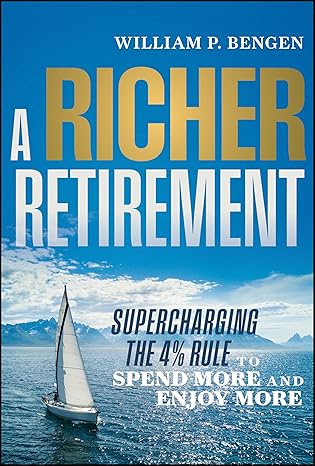
A Richer Retirement: Supercharging the 4% Rule to Spend More and Enjoy More
Customizing Your Retirement Number
When You Might Need More
While the 4% rule provides a solid framework for most retirees, there are scenarios where you might need to withdraw more than the standard 4% due to higher expenses or unforeseen circumstances. In these cases, relying on the 4% rule alone may not be enough to cover your needs. Here are some scenarios where you might need more than the 4% rule suggests:
- High Healthcare Costs:
- Rising medical expenses: Healthcare costs are one of the most significant financial concerns for retirees. As you age, you may face higher medical bills, including premiums, co-pays, prescription medications, and long-term care.
- Long-term care: The need for long-term care, such as nursing home or in-home care, can be extremely expensive. Medicare doesn't cover long-term care, and out-of-pocket expenses can drain retirement savings quickly.
- Health-related emergencies: Major surgeries, treatments, or hospitalizations can create unexpected financial burdens.
- Supporting Family Members:
- Adult children or grandchildren: If you are providing financial support to adult children (e.g., helping with college tuition, home purchases, or debt) or grandchildren, this can lead to higher than expected expenses.
- Elder care for parents: If you’re providing financial assistance for elderly parents who are in need of care, it could also add to your expenses.
- Inflation:
- Living costs increase: While the 4% rule assumes inflation is accounted for, it may not always keep pace with actual inflation, especially in high-inflation environments. If inflation is higher than expected, your purchasing power could decrease, meaning you need more withdrawals to maintain your standard of living.
- Healthcare inflation: Healthcare costs typically rise faster than general inflation, meaning the cost of medical care may eat up a larger portion of your retirement savings over time.
- Unexpected Large Expenses:
- Home repairs or replacement: Major home repairs, replacements, or renovations (e.g., replacing the roof, renovating a bathroom, or a new car purchase) can create a significant financial burden.
- Travel or leisure: Many retirees plan for travel and leisure activities, but unexpected opportunities or desires may arise, requiring additional funds.
- Market Downturns:
- Stock market volatility: If the market experiences a significant downturn shortly after you retire, your investments may lose value. Withdrawing from a shrinking portfolio can result in "sequence of returns" risk, where you’re forced to sell assets at a loss to meet your withdrawals.
Solution: Consider purchasing long-term care insurance or setting aside a specific health care reserve fund within your retirement savings.
Solution: Plan ahead by budgeting for these extra costs. This may include setting aside a portion of your savings for these potential future needs.
Solution: Monitor your withdrawal strategy and adjust it to reflect higher-than-expected inflation, especially in healthcare. You may need to increase your withdrawals temporarily or adjust your portfolio to better handle inflation.
Solution: Build a cushion in your savings for major one-time expenses. Keeping an emergency fund and making sure it’s accessible can help you avoid depleting your retirement accounts for these costs.
Solution: Diversify your portfolio with a mix of stocks, bonds, and cash to cushion against market volatility. You might also consider withdrawing less during market downturns and tapping into other resources like an emergency savings fund or delayed withdrawals.
When You Might Need Less
Scenarios with low expenses or guaranteed income...
The Retirement Budget Formula
Step-by-step breakdown of the expenses minus income method...
Adjusting for Inflation & Longevity
Why future costs matter...
It's About Flexibility, Not Just the Number
How to stay adaptable in retirement planning...